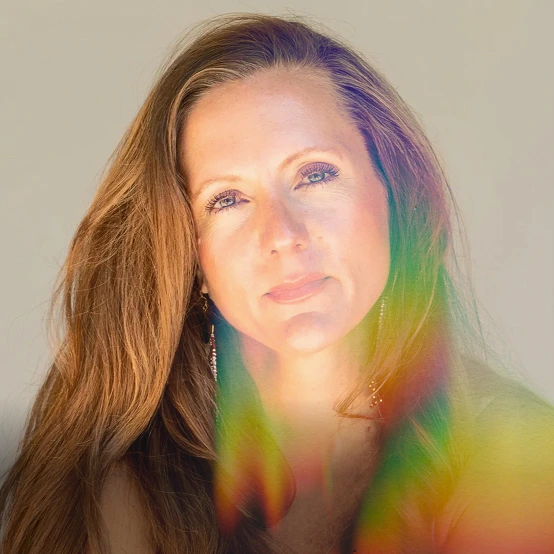
When the medicine has finished moving through, the room slowly comes back into focus. The body returns to itself, the breath settles, and something deep within whispers: now what?
That threshold, the soft and uncertain space between the journey and the rest of life, is where the real work begins. It is also where most people find themselves without adequate support. The ceremony ends, the facilitator says goodbye, the journeyer drives home, and the vast interior landscape they just traversed begins to recede like a tide, taking its insights with it if nothing is in place to receive them.
At Prism Wellness, we hold that the psychedelic experience itself is only one chapter of a much longer story. The visions, openings, tears, and unexpected laughter encountered during a journey are all seeds. Whether they take root in the soil of everyday life and grow into lasting transformation depends almost entirely on what comes next. That next has a name: integration.
What integration actually is
Integration is the slow, devotional practice of bringing what was encountered in non-ordinary states of consciousness back into the lived texture of daily life. The work touches the nervous system, the relational field, the choices a person makes at ordinary crossroads, and the subtle rhythms of how they move through the world. It is the patient art of letting the medicine continue to teach long after the substance has metabolized.
Psilocybin, MDMA, ayahuasca, ketamine, LSD, 5-MeO-DMT, iboga, and ibogaine each open different doors, but none of them complete the work. They show the territory, shift perspective, dissolve calcified patterns, and occasionally rewrite a person’s relationship to themselves, to others, and to the living world. None of that becomes permanent transformation on its own. Integration is how a person learns to actually live in the territory the medicine revealed.
“Without integration, the most profound experiences can fade like dreams at dawn. With it, they become a living intelligence woven into how a person moves through the world.”
Why integration is not optional
Western culture often frames the psychedelic experience itself as the point, treating the journey or the breakthrough as the destination. This is a quiet inheritance of extractive thinking: capture the insight and move on. We have absorbed this pattern so thoroughly that even people with deep training sometimes underestimate the depth and duration of support that follows a well-held medicine experience.
The wisdom traditions that have stewarded these medicines for millennia have always understood something different. The ceremony does not end when the medicine wears off. It continues in the days, weeks, and seasons that follow, through songs sung in community, silences kept with reverence, offerings made to the land, and elders who hold the returning traveler with both challenge and care.
When this part is skipped, the medicine is missed entirely. People collect peak experiences like souvenirs and wonder why nothing in their lives is actually changing. They may even seek more medicine, mistaking the absence of integration for insufficient dosing. Integration honors the full prism of what was encountered, including the parts that were uncomfortable, confusing, or contradictory, welcoming the whole spectrum of human experience rather than only the parts that arrive neatly and look beautiful on the surface.
Each medicine, its own aftercare
Understanding the texture of each medicine’s integration needs makes it possible to support someone more precisely in the days and weeks after an experience, and to recognize when specialized integration support is what is needed.
Psilocybin often surfaces mystical openings, encounters with grief or ancestral material, and a softening of the ego’s habitual grip. Integration calls for slow re-entry into ordinary life, space for emotional waves that may continue for weeks, and a tender, unhurried reordering of priorities. People often feel more sensitive than usual, more permeable, more easily overwhelmed by the speed of conventional life. The container needs to match that permeability.
MDMA, in research and therapeutic contexts, opens the heart and the relational field in ways that frequently require gentle, ongoing somatic support. The nervous system has often touched material it has guarded for years, sometimes decades, and a person may feel raw, tender, and unusually open in the days following. Integration becomes the practice of helping the body settle around what was encountered without forcing closure prematurely.
Ayahuasca frequently brings ancestral material, body-deep purging, and encounters with what many describe as the more-than-human world. Integration often calls for quiet time in nature, ceremonial practices that extend the container, and the support of community elders or facilitators who understand the lineage and relational context of the medicine. This is rarely work that is well-served by clinical settings alone.
Ketamine-assisted therapy opens dissociative and expansive spaces where new perspectives become available and old patterns loosen. Integration here often pairs the experience with somatic practices, talk therapy, and pattern interruption to help the brain’s renewed neuroplasticity actually take root. Without integration, the neuroplasticity window closes without being fully inhabited.
5-MeO-DMT, iboga, and ibogaine often surface experiences so vast they defy language entirely, which makes integration both especially delicate and especially slow. These journeys may require months rather than weeks of dedicated integration work before what was offered can be more fully received. Reaching out for support early, before the urgency of the landing sets in, makes the integration work much more spacious.
The body knows the way home
True integration is not primarily a cognitive process. A person cannot think their way into transformation any more than they can think their way into falling asleep or into trusting someone. The nervous system does not respond to intellectual persuasion. It responds to felt safety, to relational attunement, and to the slow, repetitive practice of returning to the body.
This is why Prism’s work is rooted in trauma-informed somatic wisdom. The body holds the imprint of every experience a person has ever had, including the ones the medicine touched. Integration practices that bypass the body, that live entirely in the realm of narrative and insight, tend to leave the actual healing untouched. The story changes, but the soma does not. Lasting change requires both.
Somatic integration at Prism may look like slow, attuned movement that allows the body to finish the stories the medicine began. It may include breathwork that reintroduces the nervous system to the spaciousness it touched during the journey, or extended time in nature, where the living intelligence of forests and water helps a person remember that they were never separate from the earth. Ritual and small devotional acts can mark the threshold that was crossed, alongside real rest, the kind that is not productive but that allows integration to unfold at the pace the body actually needs.
Healing was never meant to be solitary
Decolonizing mental health asks us to remember a quiet, inconvenient truth: healing has never been a solitary act. The framing of the lone seeker who descends into the depths, returns with wisdom, and integrates in private is a relatively recent fiction, born partly from colonial individualism and partly from the privatization of suffering. For most of human history, transformative experiences happened inside community, where elders who had walked the path stood ready to receive the returning traveler, where circles waited for their return, and where songs were sung over them while they found their way back.
This is why integration circles, group work, and heart-centered community are not supplementary offerings; they are foundational to the medicine’s completion. When people sit in circle with others walking their own thresholds, something happens that cannot happen in isolation. They witness and are witnessed in turn. The shame that often accompanies deep material begins to dissolve in the presence of shared recognition, insights find relational context, and the nervous system co-regulates with others who understand.
“This is the reweaving of belonging: how we move from personal healing toward the wellbeing of the whole, remembering that we are threads in a holistic tapestry rather than isolated fibers.”
An invitation
After a medicine experience, the truer question is not what was seen. It is who is walking with the person now.
Integration is not a phase to rush through or hand off lightly. It is what shapes whether the experience fades into a story occasionally told or becomes a life actually lived. At Prism Wellness, our offerings include trauma-informed psychedelic integration support, somatic practices, and community spaces where each person’s unfolding is honored without rush or judgment. Those returning from psilocybin journeys, ketamine series, ayahuasca ceremonies, and MDMA-assisted therapy experiences will find a place to land here.
Legal note: Prism Wellness does not provide, administer, prescribe, or recommend the use of any controlled substances. Many of the medicines referenced in this article remain illegal under federal law in the United States, with legal frameworks varying significantly by state and country. This piece is offered as educational reflection, not as medical, psychiatric, or legal advice. Decisions about a personal healing path are best made in close collaboration with qualified medical and mental health professionals who know the person’s history. Our offerings focus on integration support and somatic care, provided within the scope of our practitioners’ training and licensure.